What If Elon Musk Took Over CNN?
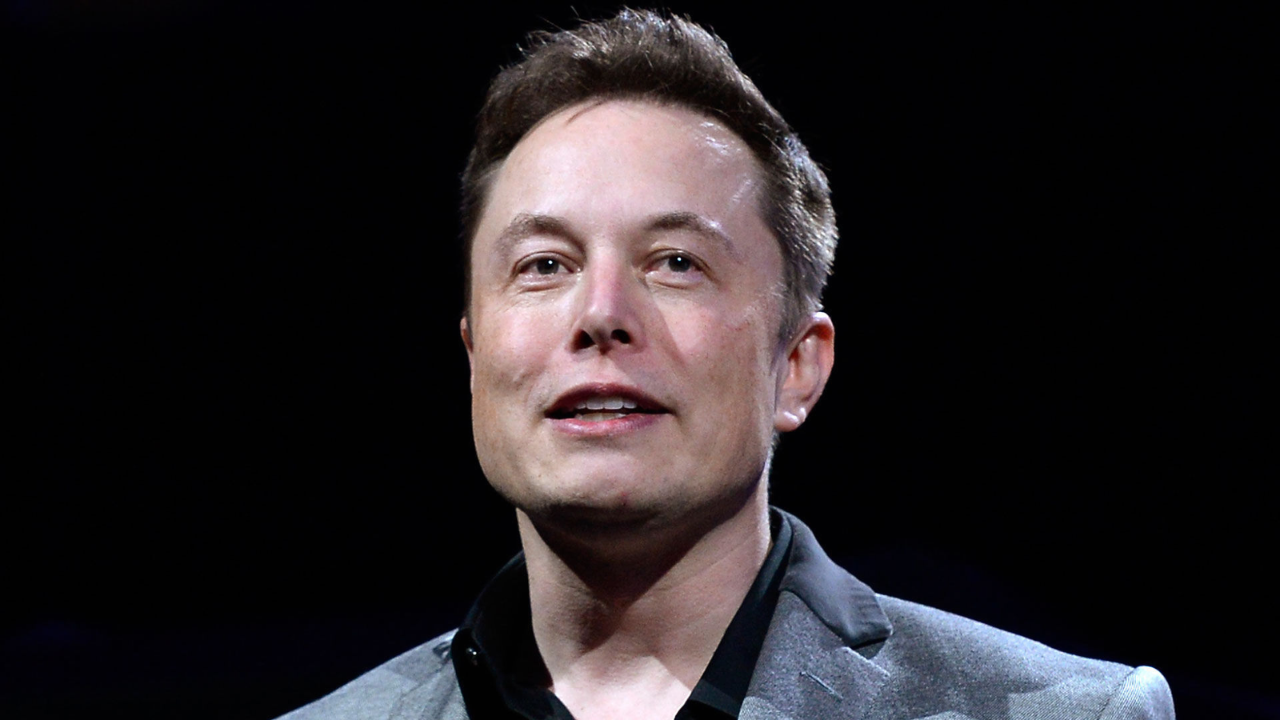
If Elon Musk took over CNN, he would not try to make it a slightly better version of itself. He would treat it the way he treated Twitter: as a decaying institution whose real product—trust—had been hollowed out by incentives, groupthink, and a business model that rewards tribal performance more than accuracy. That is a hypothesis, not a prediction that he will buy the network. It is based on what he has actually done at X, how he talks about legacy media, and the problems CNN already has on the table: shrinking linear audiences, falling cash flow, a lean-left reputation that large parts of the country simply do not trust, and a looming ownership change that already has the newsroom in funeral mode.
Musk’s public view of legacy news is blunt. He treats much of it as left-shifted, state-adjacent, and structurally incentivized to narrate rather than report. Whether that diagnosis is fair or self-serving, it is consistent. On X he has said that people who live inside legacy outlets inhabit a different reality from people who don’t. He has called corporate journalism obsolete and framed the press as a trust problem, not a staffing problem. Applied to CNN, the diagnosis would be that the network still has distribution, brand recognition, and some serious reporters, but no monopoly on breaking news, a sinking cable floor, an audience that often treats the channel as advocacy with a chyron, and a blur between news and opinion because opinion is cheaper and more tribal than reporting. He would not open with a listening tour. He would open with numbers: unique viewers, trust splits by party, cost per hour of original reporting, digital conversion, advertiser concentration, and how much airtime is actually new information versus recycled panel.
The first move would be the ugly one. At Twitter he slashed headcount first and argued about culture second, and the same instinct would show up here. CNN is not a social network, so the cuts would not be identical, but the logic would be the same: a newsroom that cannot pay for itself on declining carriage fees and softening ads will not be saved by better graphics. Overlapping digital and linear teams, underperforming dayparts, and branded shows that exist mainly to fill 24 hours would be treated as overhead until proven otherwise. Washington bureau theater—empty seats, ritual panels, the performance of proximity to power—would be a cost center, not a status symbol. Newsrooms experience that kind of cut as an attack on journalism. Musk experiences it as the only way a captured institution becomes editable.
Then he would try to separate news from sermon. That sounds simple and is not. His stated preference is more speech, less institutional filtering, and crowd correction instead of official truth. At X that became Community Notes: users propose context, other users with different viewpoints rate it, and only notes that survive that filter get attached. Research has found those notes can reduce engagement with flagged posts once they appear. The system is imperfect, participation has ebbed at times, and AI writers are now in the mix. It is still the closest thing he has to a philosophy of error correction that does not run through a newsroom hierarchy. A Musk CNN would try some version of that idea: a harder wall between reported news and analysis, on-screen corrections that are specific and embarrassing when the network was wrong, fewer packages about what “the country” thinks, and more primary documents, raw video, and competing interpretations presented as competing interpretations. He would not turn CNN into Fox. That would still be tribal. The more Musk-like move is to make the network look less certain.
Community Notes for television is the romantic version of the idea. The realistic version is a trap. Television is linear; notes work on a feed where the correction sits under the post. Newsrooms will treat crowd annotation as an invitation to trolls. Advertisers will hate visible uncertainty. Legal will hate anything that looks like the network endorsing a user correction. Staff will leak every experiment as proof the owner is wrecking journalism. So he would probably pilot it on digital first—the site, the clips, the live blogs—where the product already resembles a feed. Linear would change more slowly, and more violently, because anchors are the brand.
Talent policy would be performance plus not being a political officer. The pattern at his other companies is to keep people who ship, fire people who treat the institution as a moral platform, and tolerate a lot of public chaos while that happens. Some recognizable correspondents would stay if they still break news. Some prime-time brands would be treated as liabilities if their value is loyalty signaling. Contributors who exist to confirm a worldview would be the easiest cuts. He would also book people who will say things the room hates, including on the left, if they have a record of being right. The risk is obvious. A news organization can lose its remaining high-trust viewers faster than it gains the distrustful ones, and “both-sides” as performance is not the same as “both-sides” as method.
The business model would be forced into the open. Cable news still lives on carriage fees and a shrinking ads market. Musk’s instinct at X was to reduce dependence on advertisers who want a speech veto, then invent new revenue while accepting a messy interim. For CNN he would treat the linear channel as a declining annuity, push a more aggressive digital subscription, put more original reporting on cheap distribution, and experiment with paid live events, debates, and document dumps rather than another 8 p.m. panel. He would talk about this as first principles: if people will not pay for the reporting, the reporting is not valuable enough, or the packaging is lying about what it is. That last sentence is the one that would start the staff revolt.
A few popular fantasies should be retired. He would not rename it X News on day one and turn it into a meme channel. Brand destruction is expensive, and CNN’s name still has residual utility. He would not staff it entirely with replies-guy favorites, because that produces a mirror-image propaganda shop and fails the “different reality” test he likes to apply to others. He would not “restore Walter Cronkite.” That figure is a nostalgia object. The information environment that produced him is gone. He also would not be a hands-off owner. The Twitter Files era and his posting habits show the opposite: he intervenes, often in public, often before the institution has a plan.
Three constraints would blunt the fantasy version immediately. Law and contracts are not Twitter’s terms of service. The audience is not one audience: the people who still watch CNN want CNN, and the people who hate it may not watch even a reformed version. And Musk’s own credibility is now part of the product. He is not a neutral engineer arriving from outside politics. A large share of the public would treat every edit as partisan capture, just as another large share already treats the current CNN that way. Ownership does not erase that. It relocates it. There is also a timing irony. CNN is already heading into a new ownership era under the Ellison/Paramount orbit, with talk of editorial boards, combined news operations, and cost pressure. The newsroom anxiety exists whether the buyer is Musk or not. The difference would be speed and the ideology of the rebuild.
If Musk took CNN, the only metric he would treat as real after the first year is not whether MSNBC and Fox yelled about it. It would be whether people who previously dismissed the network started using it as a source of facts they did not already believe. That is a higher bar than hiring a few conservatives or adding a corrections page. It is also a higher bar than owning the libs or saving the brand. News organizations fail in two directions. They can become propaganda. They can also become so frightened of being called propaganda that they produce fog. Musk’s record suggests he fears the first more than the second, and that he is willing to break a lot of glass to force a reset.
Whether that produces a better CNN, a smaller CNN, or a short, loud experiment that leaves a crater is the part no thought experiment can settle. Institutions have immune systems. Owners have attention spans. Audiences have alternatives. The honest version is not that Elon Musk would fix CNN. It is that he would try to make it a company that can survive without requiring you to already agree with it—and he would do it with the same tools he used on X: fewer people, more public conflict, less official narrative, and a bet that correction from the outside beats consensus from the inside. That bet has costs. It also names the actual disease. Most plans to save CNN still assume the patient is basically well and just needs better lighting.