Speaker Johnson Slams Dems For Opposing GOP’s Pro-America Agenda
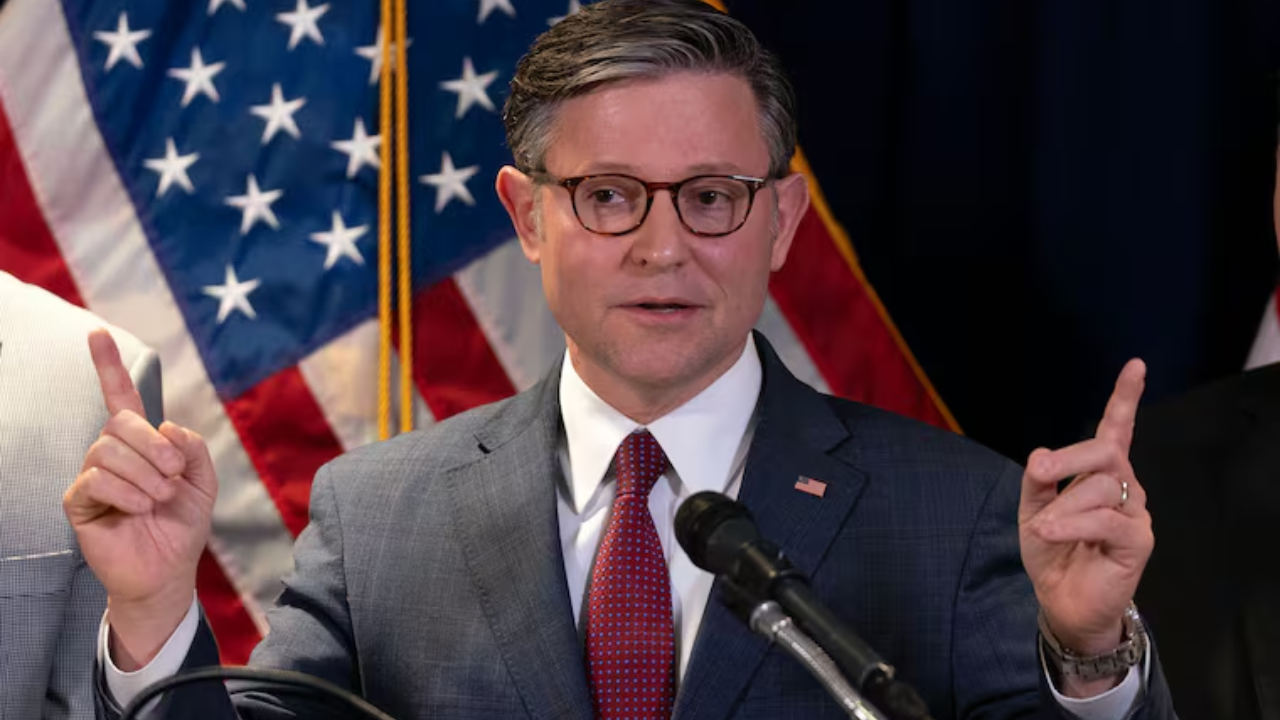
House Speaker Mike Johnson is intensifying his criticism of Democrats on taxes and federal spending in the run-up to the November midterms. He accuses the opposition of resisting Republican tax reductions and helping produce government shutdowns that left large numbers of federal workers without regular pay.
In a recent social media post, Johnson contrasted the two parties’ records as Republicans work to hold Congress. He wrote that Democrats opposed letting Americans keep more of their earnings and blocked paychecks for hundreds of thousands of workers for nearly four months. Republicans, he said, deliver real solutions, while Democrats produced the two longest federal government shutdowns in U.S. history. He closed by saying Democrats are “on the side of crazy.”
The remarks fit a larger Republican push to make taxes, spending, and the recent shutdown fights central campaign issues. Johnson has repeatedly touted tax changes Republicans passed in 2025, arguing they lowered federal taxes for working- and middle-class households. Provisions he highlights include a larger standard deduction, an expanded child tax credit, a $6,000 deduction for qualifying seniors, and deductions tied to tip and overtime income. He has cited estimates that the package produced an average 15 percent tax cut for families earning between $15,000 and $80,000 a year.
Democrats reject that framing. They contend the law’s benefits tilt toward higher-income households and corporations and that other parts of the package cut spending on health care and assistance programs.
Johnson has sharpened the contrast as Election Day approaches. In another message he argued that voters who want more money in their pockets must keep Republicans in charge, warning that Democratic control would mean higher taxes and more federal spending.
The speaker’s latest comments also return to the long shutdown fights of the previous year. The first shutdown began October 1, 2025, after Congress failed to agree on funding legislation. Republicans supported a short-term measure that largely continued existing funding levels. Democrats sought health-care concessions, including an extension of enhanced Affordable Care Act subsidies and changes to Medicaid rules. Neither side initially gathered the 60 Senate votes needed to advance its plan.
The resulting shutdown disrupted federal operations. Hundreds of thousands of employees were furloughed, and hundreds of thousands more worked without regular pay. By late October, estimates put furloughed workers at about 670,000 and those working without pay at roughly 730,000.
Each party blamed the other. Johnson maintained that Senate Democrats could have reopened the government by backing the House-passed funding bill. Democratic leaders replied that Republicans controlled the House, Senate, and White House and should have negotiated on health care and other priorities instead of insisting on their own proposal unchanged.
The standoff produced an unusually long period of funding disruptions, including a later 76-day partial shutdown affecting the Department of Homeland Security.
Congress has since acted to avoid another shutdown just before the midterms. Earlier this month the House passed a temporary spending bill, 370-48, that keeps the government funded through December 11 after the Senate had already approved it. Johnson called the vote proof that Republicans were determined to prevent another funding crisis, noting troops, Coast Guard personnel, TSA employees, and other federal workers who would be affected by another lapse.