Suicidal Empathy: How Misplaced Compassion for Criminals Endangers Innocent Lives
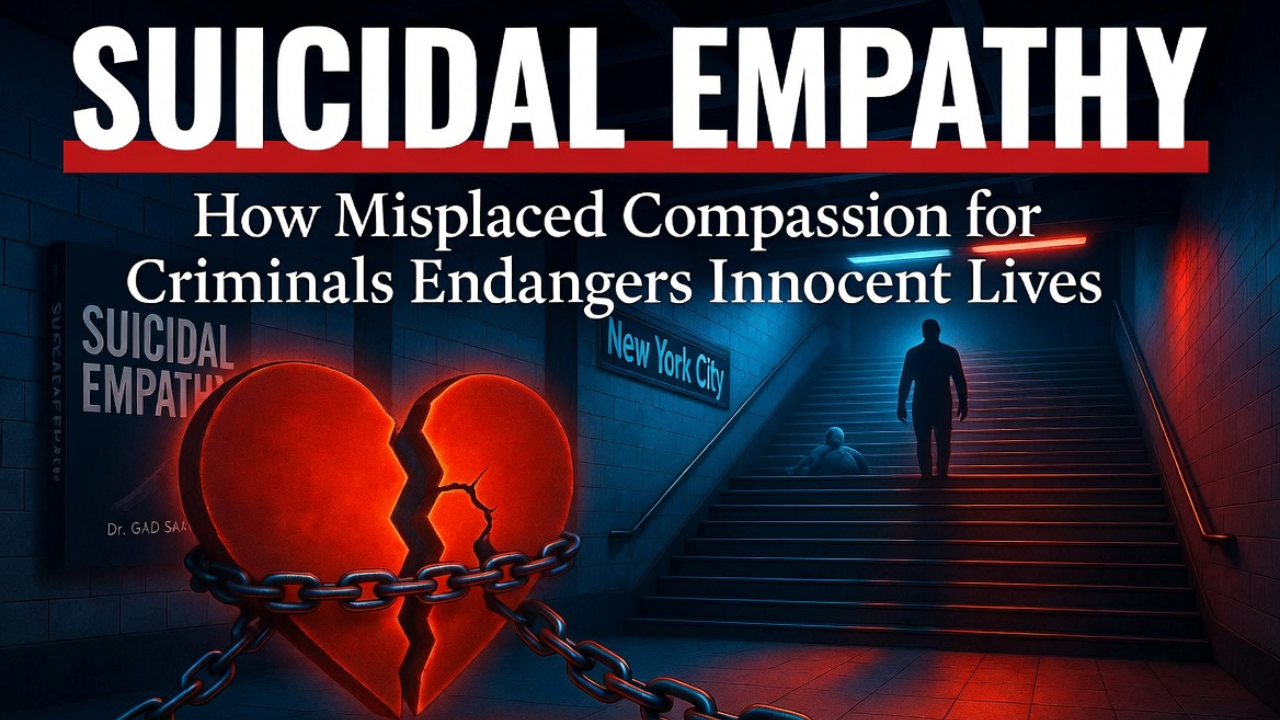
A devastating incident in a New York subway station illustrates the deadly consequences of what experts term "suicidal empathy." Seventy-six-year-old retired teacher Ross Falzone lost his life after being violently pushed down the stairs by thirty-two-year-old repeat offender Rommel Burke. The attack was not random; Burke had assaulted another person just weeks earlier, yet he remained free to roam the streets and strike again.
The reason Burke was still at large traces back to a twenty-three-year-old woman who had declined to cooperate with prosecutors in the prior case. She later admitted her decision stemmed from a reluctance to "put another black man in jail." This personal choice, driven by a desire to avoid contributing to the incarceration of someone from a particular racial group, directly enabled Burke to commit the fatal crime that claimed an innocent life.
This real-world tragedy serves as a chilling case study in how empathy, when misdirected, can override basic safety and justice. Rather than focusing on protecting law-abiding citizens, certain attitudes extend endless leniency to perpetrators, treating them as victims of larger societal forces while sidelining the suffering of those they harm.
Dr. Gad Saad, author of the book Suicidal Empathy, explores this phenomenon in depth. He stresses that empathy is not inherently negative; it is an essential human quality shaped by evolution to promote social bonds, cooperation, and mutual support within communities.
The problem arises when empathy becomes hyper-activated in the wrong contexts. Saad explains that excessive compassion lavished on criminals and repeat offenders—often framed through lenses of systemic racism or disadvantage—creates a warped moral framework. In this view, perpetrators receive constant second chances and excuses, while the actual victims are left without adequate protection or recognition.
One striking example Saad highlights involves a Norwegian man who was raped by a Somali migrant. Instead of demanding full accountability, the victim felt overwhelming guilt when his attacker faced potential deportation. He worried about the rapist's future "flourishing," placing the offender's well-being above his own need for justice and personal security.
Such cases reflect deeper cultural patterns, including narratives rooted in woke ideologies and racial guilt. These frameworks encourage a one-way street of compassion: boundless forgiveness and understanding for those who commit crimes, paired with little regard for the law-abiding individuals who bear the consequences.
In the end, this distorted form of empathy fuels broader societal issues. Soft-on-crime policies, judicial decisions swayed by virtue signaling, and everyday choices that prioritize ideological compassion over practical safety all contribute to an erosion of public order. Recognizing when empathy crosses into self-destructive territory is essential for restoring balance, protecting the innocent, and preserving a functioning society.