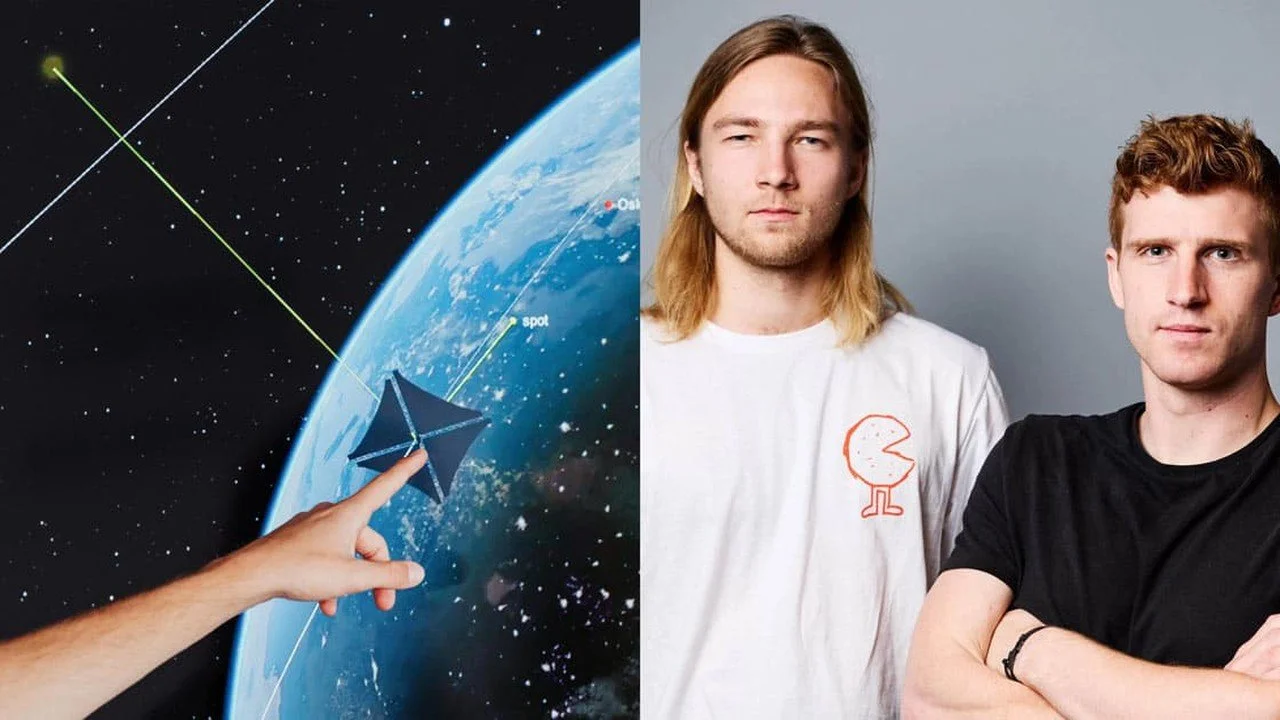
A California space startup is moving ahead with plans to beam sunlight onto Earth at night, even as scientists warn the project could disrupt wildlife, endanger the eyesight of telescope users and devastate ground-based astronomy.
Reflect Orbital’s proposal relies on orbiting mirrors that would redirect sunlight toward selected locations, and it could eventually grow into a network of tens of thousands of satellites. The Federal Communications Commission approved construction and launch of a prototype earlier this year despite opposition from astronomers.
The backlash intensified after a nighttime test in the California desert, where the company lit up a mountainside without notifying local astronomers. According to Sky & Telescope, Reflect Orbital used powerful spotlights near Lone Pine, California, to simulate the illumination its satellites could one day provide. A promotional photo showed a brilliant light, brighter than a full Moon, casting long shadows across the desert brush. Local officials and the county government appeared to have been caught off guard, and it remains unclear whether the company had permission for the test.
The startup argues that redirected sunlight could extend solar power generation, help search-and-rescue operations and support disaster response. Scientists counter that those benefits would come with consequences reaching far beyond the intended targets.
Princeton University astrophysicist Gaspar Bakos told Sky & Telescope that “there’s no nice way of doing this,” saying artificial sunlight ignores decades of progress in reducing light pollution. While Reflect Orbital maintains its beams would be controllable and could be dimmed, a study by Bakos and his colleagues found the illumination could spread more than 18 miles beyond the intended location. Bakos went as far as calling it “the end of ground-based astronomy.” Astronomers have also warned that anyone looking directly at the reflecting satellites through a telescope could suffer permanent eye damage.
Scientists also warn that extra light at night could harm nocturnal animals and interfere with biological cycles shaped by darkness. Earthjustice senior attorney Jan Hasselman told The Guardian it is “an idiotic project” with many unresolved questions and significant potential impacts, noting that life on Earth evolved around the rhythm of day and night. The project also faces concerns about possible surveillance uses and military customers.
Reflect Orbital is seeking to launch early test satellites from India, a move critics see as an attempt to sidestep American regulatory approval. That raises a basic question: who gets to authorize a private company to change nighttime conditions for people far outside the area buying its service?
University of Hawaii climate scientist David Ho pointed out the contradiction between proposals to reflect sunlight away from Earth to curb global warming and Reflect Orbital’s plan to send more of it toward the planet. As Ho put it to The Guardian, imagine wanting to turn those mirrors around “so that the Earth gets hotter.” Critics warn that while the company sells sunlight on demand, the price could be paid by everyone living under a night sky they never agreed to have lit up.