Michigan Senate Hopeful Abdul El-Sayed’s Research Linked Assimilation to Worse Health for Arab Americans
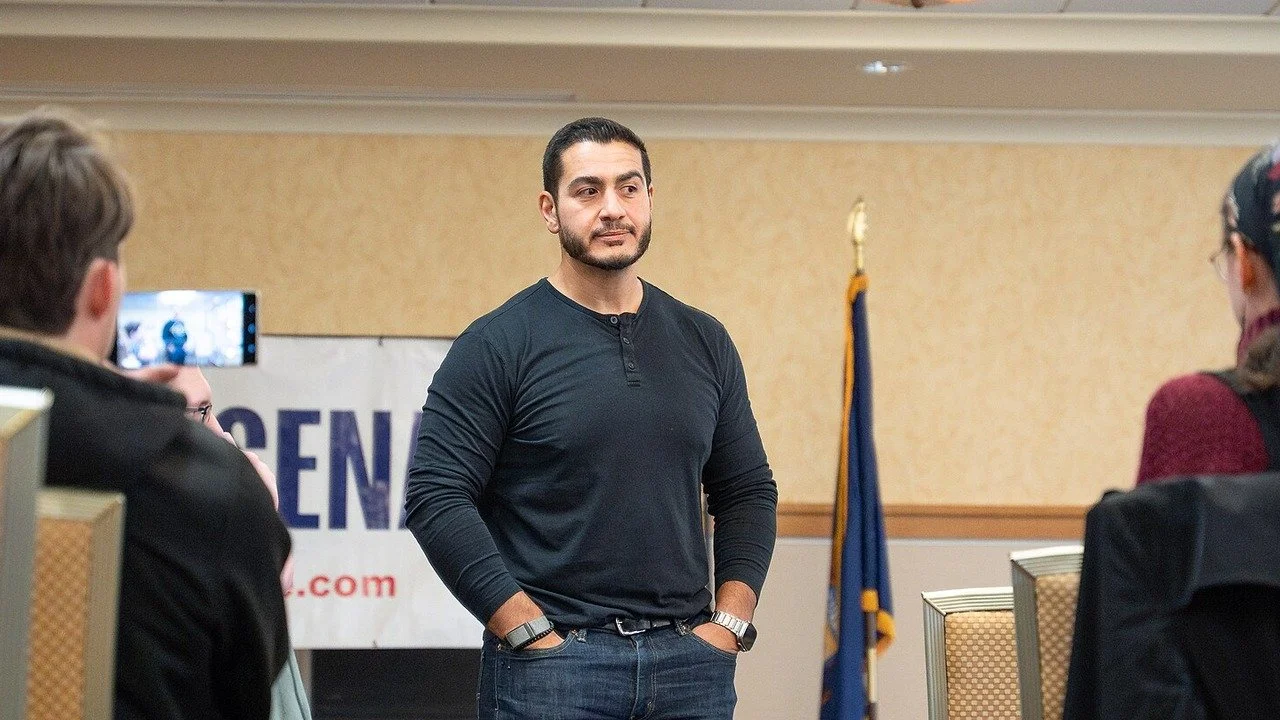
Photo: Conlan Houston, CC BY-SA 4.0, via Wikimedia Commons
Abdul El-Sayed, the Democrat running for U.S. Senate in Michigan, has built his campaign around his record as a public health official looking out for ordinary people. Critics say his academic research tells a different story.
On the campaign trail Tuesday, El-Sayed pointed to his time as the top health official for Detroit and Wayne County, saying his biggest focus has been that too many Americans can't get the health care they need.
His published research, however, centers on a narrower question. In several peer-reviewed papers he coauthored, El-Sayed argued that Arab Americans who live in mostly Arab communities tend to be healthier, and that "acculturation" (the academic term for adopting the host country's customs and way of life) can cause their health to decline. Critics read the papers as implying that living among white neighbors is a health risk.
Ian Kingsbury, senior director of the Center for Accountability in Medicine at Do No Harm, called the work "pretty radical," saying it appears to promote Arab separatism and isolation dressed up in scientific language.
A 2010 paper compared Dearborn with other parts of Michigan and found fewer low-birth-weight babies among Arab mothers living mostly among other Arabs than among those living near white residents. The paper suggested that as minorities interact with the white majority, they may pick up cultural habits that weaken that protection.
A 2008 paper made a similar argument, crediting strong social ties in dense Arab communities with shielding Michigan mothers from low-birth-weight outcomes linked to discrimination after Sept. 11. A 2009 study comparing the life spans of Arab and white Americans called for more research on how assimilation affects Arab health, and a 2011 paper said Arab Americans may feel pressure to assimilate out of fear of discrimination, which could hurt their health.
That 2011 paper also took a different turn, suggesting some aspects of Arab culture are less healthy than white culture and citing stereotypes such as a "more corpulent image of beauty." Some researchers argue that studies like these lend academic credibility to broad ethnic stereotypes.
Kingsbury also faulted the methods. He noted that the 2010 study controlled for assimilation-related factors such as immigration status while trying to measure the effect of living in an Arab community, which he compared to judging a baseball team while controlling for its hitting, catching and pitching. The authors acknowledged that they accounted for only one socioeconomic factor, the mother's education, and did not include income.
"The reality is that this is lousy scholarship that does not support the conclusion that he makes," Kingsbury said, adding that peer review in public health too often favors ideological conformity over rigor.
El-Sayed's campaign did not respond to requests for comment.