Supreme Court Strikes Down Hawaii's Gun Restrictions In Major Second Amendment Case
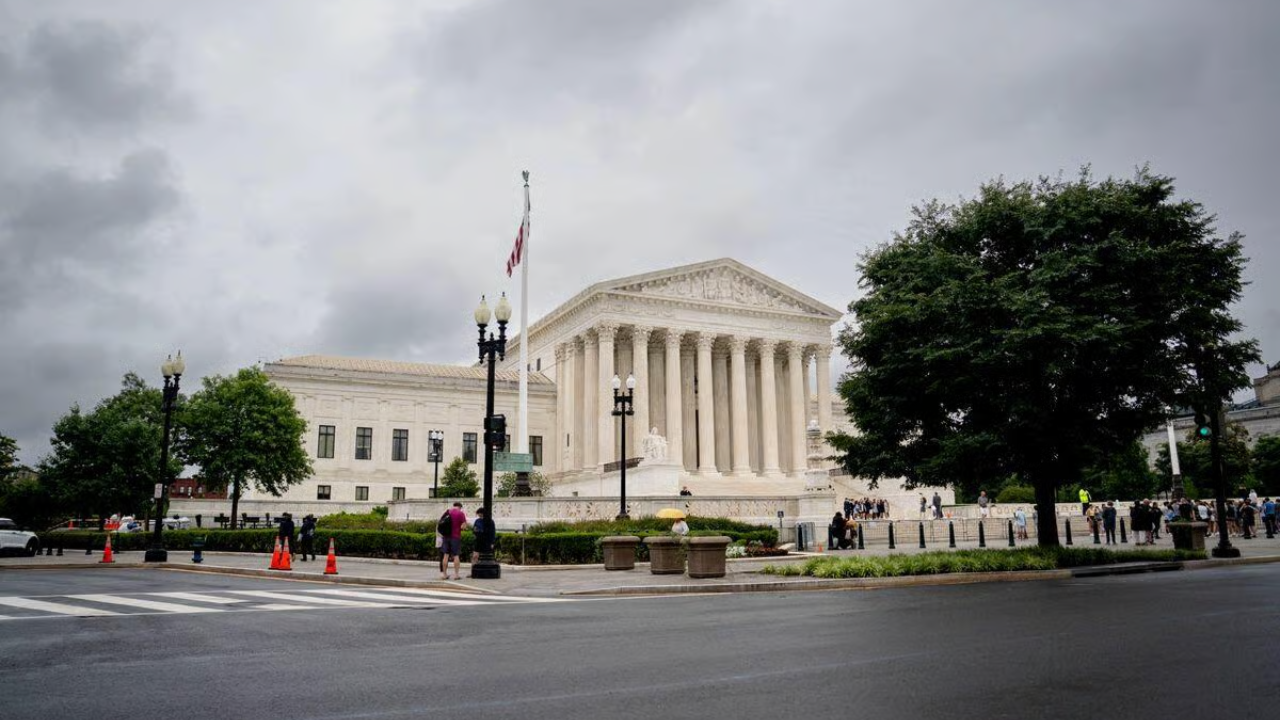
In a major victory for gun rights advocates, the U.S. Supreme Court voted 6-3 on June 25 to invalidate a Hawaii law that restricted residents from carrying concealed weapons in privately owned places open to the public, such as gas stations and shopping malls, unless they first obtained permission from the property owners. This ruling represents a significant development in the ongoing interpretation of the Second Amendment.
The majority opinion was written by Justice Samuel Alito in the case of Wolford v. Lopez. Three justices, including Elena Kagan, Ketanji Brown Jackson, and Sonia Sotomayor, dissented from the decision, which had been closely monitored by those supporting expansive gun rights.
Justice Alito asserted in the opinion that the Second Amendment possesses the exact same meaning in every part of the United States. He emphasized that it cannot be subordinated to local customs or cultural elements, such as the spirit of Aloha in Hawaii, any more than it would yield to similar regional influences in other states like New York or Illinois.
Furthermore, Alito pointed out that the amendment applies uniformly whether in the state with the lowest gun ownership rate or the highest. He argued that merely local attitudes are insufficient to alter the scope of fundamental constitutional guarantees under the Bill of Rights that have been incorporated to apply against the states through the Fourteenth Amendment.
The challenged Hawaii law, Act 52, made it illegal to carry handguns on private property without express authorization from the owner, lessee, operator, or manager. It also extended prohibitions to firearms in bars, beaches, parks, and various sensitive locations including hospitals, schools, and government buildings.
Under the provisions of this act, the default position was that concealed carry was not allowed on private property unless owners took affirmative steps to communicate their allowance to the public. Supporters viewed this as a measure to protect property rights and safety, while detractors labeled it the "vampire rule" because it required explicit permission to enter with a firearm, reminiscent of folklore requiring invitations.
In the lower courts, a federal district judge had initially blocked enforcement of the law. However, the Ninth Circuit Court of Appeals largely upheld it in a 2-1 decision, finding that it fit within the historical tradition test established in the Supreme Court's 2022 Bruen ruling on public carry rights. The appeals court cited old laws from New Jersey and Louisiana as historical analogs.
The case was initiated by three individuals holding Hawaii gun permits and the Hawaii Firearms Coalition, who contended that the restrictions violated their constitutional right to bear arms for self-defense. During arguments, Hawaii defended the statute as balancing private property interests with public protection, while challengers maintained it unduly burdened their Second Amendment protections.