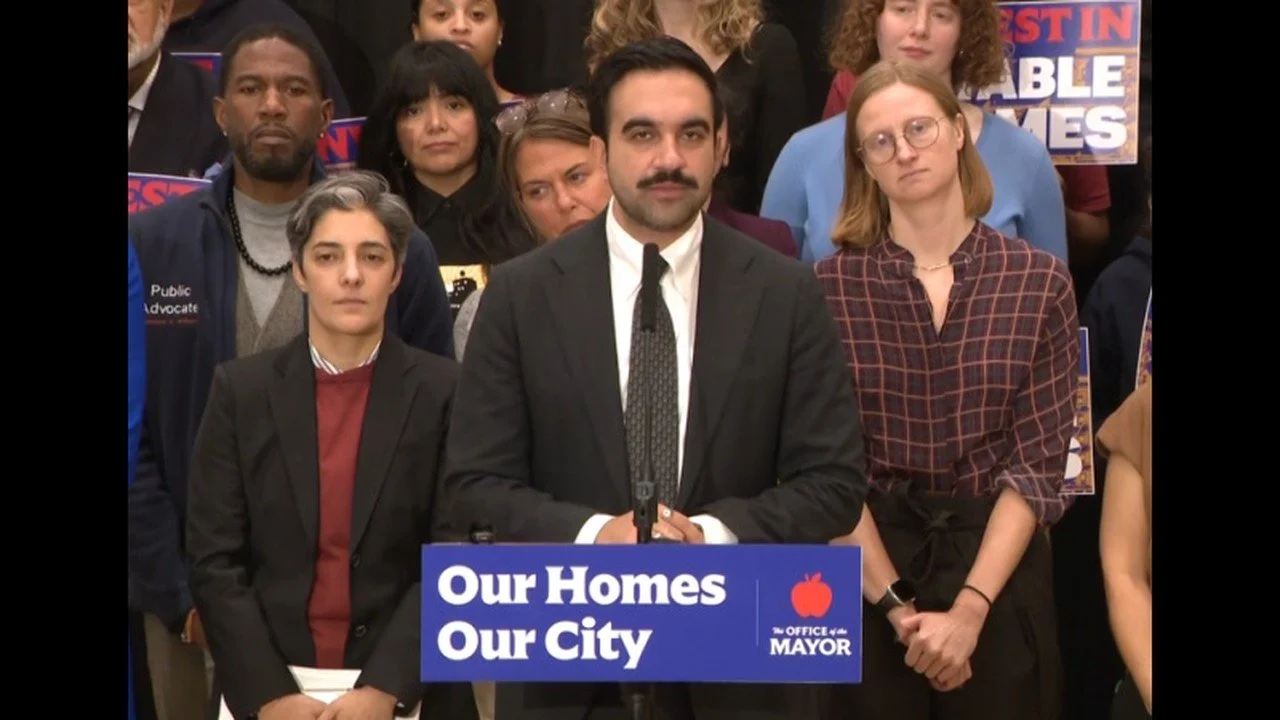
New York City Mayor Zohran Mamdani signed the Community Opportunity to Purchase Act, a law that gives nonprofit organizations the first chance to buy distressed residential buildings.
Under the law, the Department of Housing Preservation and Development will keep a list of "qualified entities," including vetted nonprofits, tenant groups, community land trusts, and other mission-driven organizations with experience acquiring, preserving, and managing affordable housing. Those groups must also show they have the financial and organizational capacity to buy and operate eligible properties.
When a covered building is put up for sale, qualified entities will get an exclusive 145-day window to complete the purchase. If a qualified entity's offer is rejected and another buyer later makes an offer within the following year, qualified entities will have a right of first refusal to match it.
Covered properties include multifamily buildings with four or more units that are in significant disrepair, as well as buildings with affordability restrictions under HPD regulatory agreements. The official description of the law says it is meant to create a path for community-based ownership so these properties are repaired, maintained, and operated in partnership with tenants rather than left to deteriorate by negligent owners.
According to The New York Post, COPA covers about "2,100 properties across the five boroughs." The law applies to "primarily rent-stabilized buildings with outstanding housing code violations." Those landlords cannot list the properties on the market until they notify the Department of Housing Preservation and Development.
The New York Post reported that landlords then have to wait out a 20-day bidding window for qualified nonprofits to express interest, and a maximum of 70 days to make an official first offer. Owners are not required to accept a nonprofit offer and may instead negotiate a contract with an outside buyer, which then triggers a right of first refusal. Under COPA, the nonprofit then has 15 days to match the outside buyer's terms. If it does, the landlord is required to sell to the nonprofit over the outside buyer.
The law does not apply to buildings with five or fewer units.
"Too many New Yorkers have watched their homes deteriorate while landlords extract profits and tenants are left to fight for the repairs they deserve," Mamdani said. "That's not how housing should work. Our homes should be places of stability, not vehicles for speculation." He said COPA "puts power in the hands of the community organizations that have spent years serving our neighborhoods and fighting to keep New Yorkers housed."
Former Mayor Eric Adams vetoed the law before he left office. Property owners and some local officials said the government should not control the sale of private property and worried that longtime homeowners could be targeted.
Mamdani also froze rent in the city. The freeze applies to one- and two-year lease renewals between October 1, 2026, and September 30, 2027, covering 40% of rental housing.
Landlords sued Mamdani, but Manhattan/Staten Island Supreme Court Justice Brendan Lantry overturned a lower court's block on the freeze and allowed it to move forward.