Kornacki: Minnesota Fraud Scandal Could Put Blue-State Senate Seat in Play for Republicans
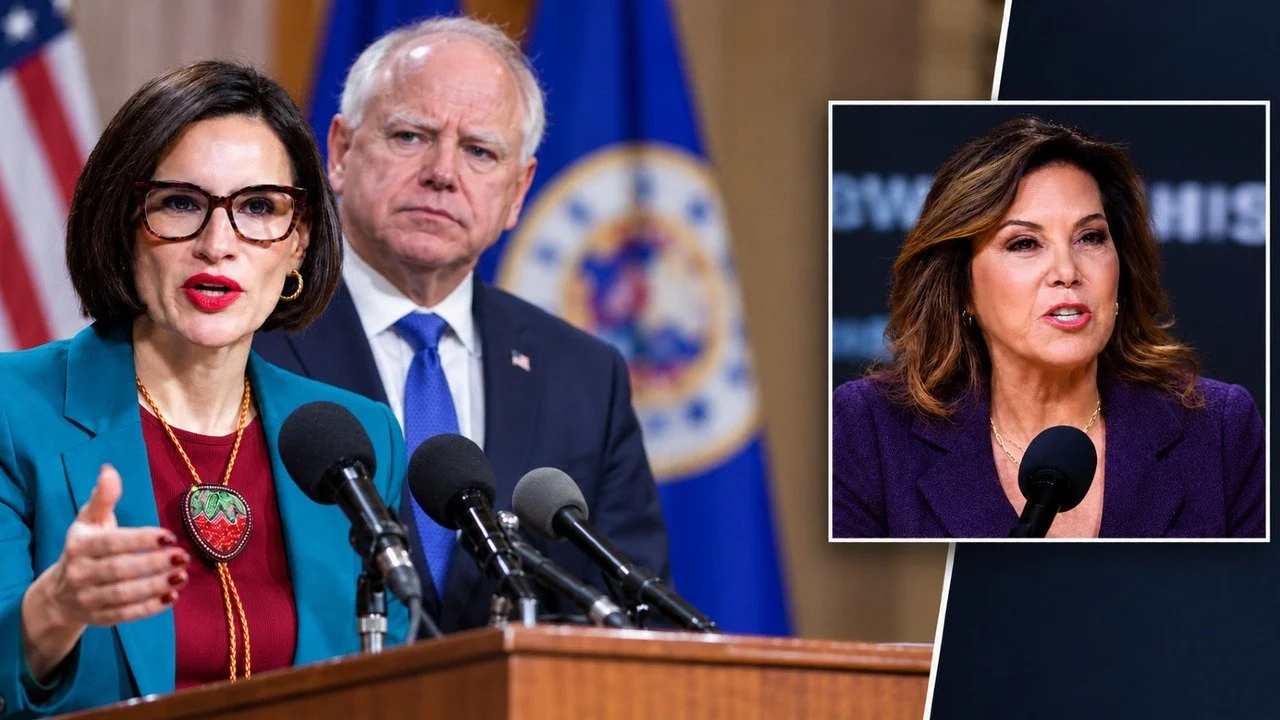
Republicans may have a real shot at flipping a Senate seat in a reliably blue state, according to NBC News chief data analyst Steve Kornacki. Appearing Wednesday on NBC’s “TODAY,” Kornacki pointed to Minnesota as a possible GOP pickup heading into the final stretch before the November 3 midterms, saying the state’s massive social-services fraud scandal could become a decisive late issue in the surprisingly tight race between Democratic Lt. Gov. Peggy Flanagan and Republican Michele Tafoya.
Republicans have not won a U.S. Senate race in Minnesota since 2002, but recent polls show Tafoya within a few points of Flanagan in the contest to succeed retiring Democratic Sen. Tina Smith. “What they think is working in their favor here is there’s a state scandal there about Medicaid fraud,” Kornacki said, referring to the controversy that has engulfed state government under Democratic Gov. Tim Walz.
Kornacki noted that Flanagan has been Walz’s lieutenant governor for his entire administration, and that Tafoya has made that link the centerpiece of her closing case against her. “There does seem to be a tie within the state that might be working against Democrats,” he said.
Minnesota has been hit by a string of high-profile fraud cases tied to government-funded programs, with dozens of defendants convicted in schemes worth hundreds of millions of dollars and growing questions about whether state agencies responded quickly enough to warning signs. The most notorious involved Feeding Our Future, the nonprofit at the heart of a sprawling scheme involving roughly $250 million in federal child-nutrition funds during the COVID-19 pandemic.
Tafoya has argued again and again that Flanagan bears political responsibility after eight years as the second-highest official in the Walz administration. Flanagan has countered that overseeing the affected programs was not part of her role. The issue sparked one of the sharpest moments of their October 16 debate, when Flanagan said Walz had acknowledged responsibility for oversight failures and conceded officials should have acted sooner. Asked whether she personally accepted responsibility, she said the governor had made clear that “the buck stops with him,” while highlighting policy areas she had led.
Tafoya pushed back immediately, arguing that Flanagan had spent years presenting herself as an influential partner in the administration only to distance herself from its failures now that she is seeking a Senate seat. “This historic fraud happened under her watch,” Tafoya said.
The polls show a close race, though Flanagan still holds a narrow lead. The RealClearPolitics average through October 21 had Flanagan at 46.5% and Tafoya at 43.3%, a 3.2-point edge. A Rasmussen poll taken October 20-21 showed Flanagan ahead 48% to 45% among 1,182 likely voters, with a three-point margin of error, and a Star Tribune/KARE 11 poll from October 5-7 had her up 47% to 43%, with 9% undecided and a margin of error of plus or minus 3.5 points. That survey found the fraud controversy was swaying some voters, while other issues, including views of President Donald Trump, were helping Flanagan hold her lead.
Minnesota has long been tough ground for Republicans, who last won a statewide election there in 2006 and a Senate race in 2002. Tafoya, a former longtime NFL sideline reporter for NBC and other networks, is running for office for the first time and has centered her campaign on government accountability, affordability, and the fraud scandals. Flanagan has stressed her experience in state government and argued that Tafoya would back Trump’s agenda in Washington.
With Election Day less than two weeks away, Kornacki’s analysis helps explain why a race that once looked less competitive is drawing growing national attention, with the fallout from Minnesota’s fraud scandals emerging as one of the central issues dividing the two candidates.