Obama's Relentless Hold on the Political Spotlight
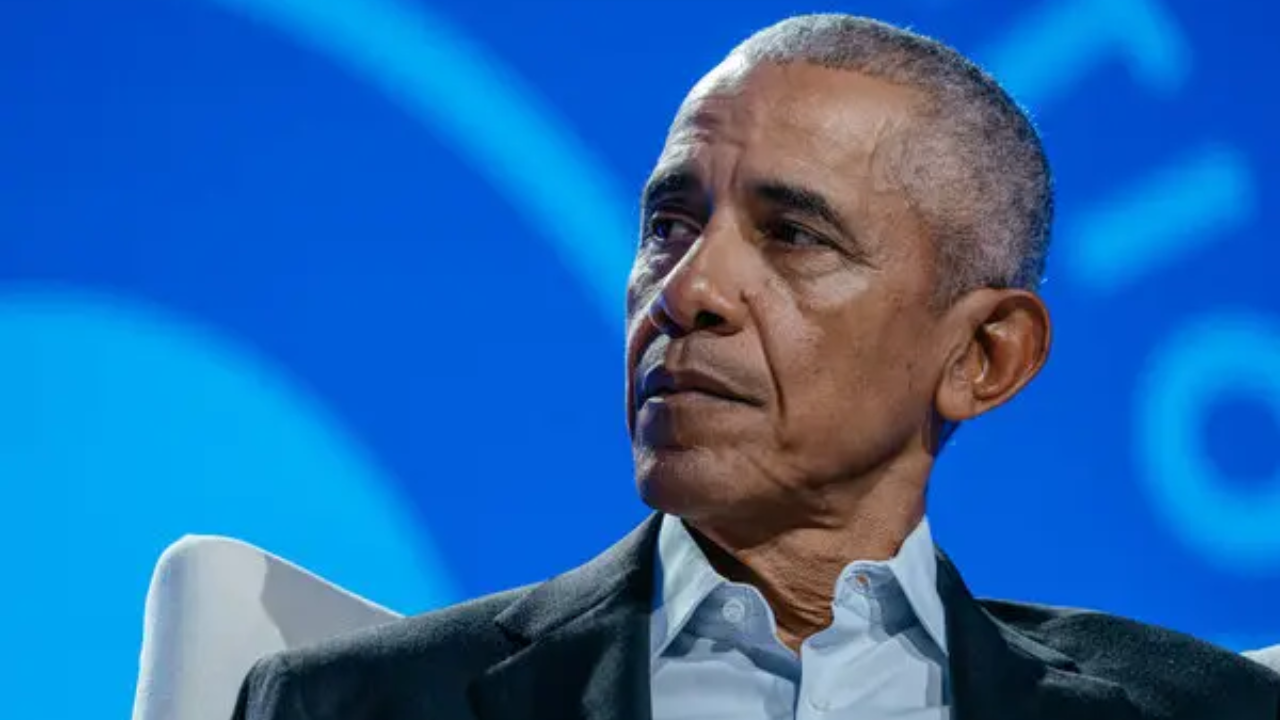
In 1921, Woodrow Wilson—America’s original transformative progressive president—became the first former chief executive to settle permanently in Washington after leaving office. To be fair, Wilson had endured a devastating stroke two years earlier that left him partially paralyzed and nearly blind; he died in 1924. Barack Obama, the fourth president in that same progressive lineage after Wilson, Franklin D. Roosevelt, and Lyndon B. Johnson, had no comparable health crisis when he and Michelle chose to make their home in the upscale Kalorama neighborhood of the capital. Physical closeness to the White House undoubtedly played a role; Obama paid at least one official visit to his former vice president there, and possibly others in private.
Yet the real significance of that decision goes far beyond convenience. By staying put, Obama sent a clear message: he is still here, and he has no intention of leaving the national conversation. While some recent presidents, such as George W. Bush, have embraced quiet retirement—Bush even took up painting—Obama prefers golf only as a sideline. What truly energizes him is staying active in politics and public commentary.
The country is now paying the price for that decision. Ever since moving the short distance from the White House to Kalorama, Obama has been a constant critic of the Trump-era Republican Party and an enthusiastic booster for Democratic candidates. The man who once captivated the nation with a 2004 convention speech declaring there was no liberal America or conservative America—only the United States of America—has instead governed and behaved as a relentless divider.
That pattern continues today. In March, he released a video endorsing Virginia Governor Abigail Spanberger’s aggressive congressional redistricting push, which aimed to shift the state’s 11-seat delegation from a modest 6-5 Democratic edge to a commanding 10-1 advantage. The measure passed by a razor-thin margin and now faces a procedural challenge before the Virginia Supreme Court. Redistricting is perhaps the most openly partisan issue in American politics, yet Obama framed it as an effort to “level the playing field.” The irony is striking: Obama had previously condemned gerrymandering, tweeting in 2020 that it “contributed to stalled progress and warped our representative government.” Now, it seems, the practice is acceptable when it benefits his side.
His appearance this week on The Late Show with Stephen Colbert offered even more examples of selective outrage. Obama lambasted Republicans for undermining judicial independence and the rule of law, while accusing Donald Trump of using the Justice Department to target political opponents. Yet this is the same former constitutional-law lecturer who, while the Supreme Court weighed the legality of his signature health-care law, warned in a Rose Garden speech that it would be “unprecedented” and “extraordinary” for the justices to perform basic judicial review. This is the president who famously declared he could achieve his agenda with “a pen and a phone.” And this is the man who remained conspicuously silent about the aggressive, unprecedented prosecutions of Trump by the Biden Justice Department—despite living just blocks away.
The double standard is breathtaking. But the deeper question remains: why does he keep doing it? Obama has reportedly acknowledged that his political involvement is creating “genuine tension” in his marriage. It also isn’t delivering clear wins for his party. Virginia’s redistricting vote was far closer than expected—decided by roughly three percent, much tighter than similar recent statewide contests. Broader trends are even more telling: Obama became the star surrogate for the Harris-Walz ticket after Democrats replaced Joe Biden in 2024, yet that ticket lost every swing state. The brand of politics he championed—an early form of what would become woke orthodoxy—was soundly rejected by voters.
So what drives him? Those who knew him as a constitutional-law lecturer at the University of Chicago offer a clue. Colleagues described him as cold, aloof, and largely uninterested in genuine intellectual exchange. He preferred his own reflections to collaborative debate, and a portrait of him teaching still hangs outside one of the classrooms there. That same arrogance shaped his presidency—“I won,” he bluntly reminded Republican lawmakers shortly after taking office—and it shapes his behavior today.
Pride, as the Book of Proverbs warns, goes before destruction. Whether Obama will absorb that lesson in time—both for the sake of his marriage and for the electoral prospects of his party this November—remains to be seen.